
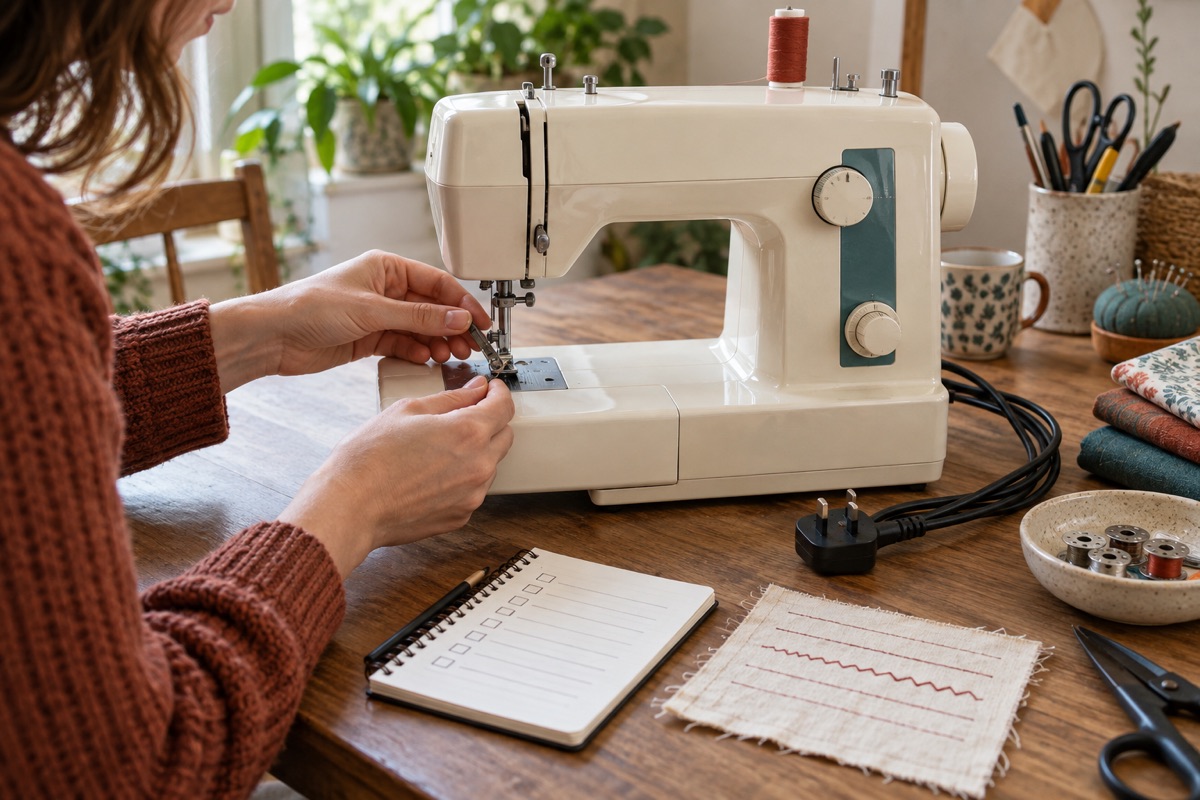
A good used machine can be a better purchase than a flimsy new one, but “vintage”, “serviced” and “heavy duty” are not proof of condition. The most useful questions are whether the exact model is supported, whether it sews your intended fabric cleanly and what it will cost to put right. A private-sale bargain with a missing pedal or seized handwheel can become expensive quickly.
Before leaving home
Ask for a clear photo of the model plate, power connector, foot and bobbin area. Look up the exact manual on the maker's support site. Confirm the correct pedal and lead are included, plus bobbin case where relevant. Ask whether the machine can be demonstrated threading, winding a bobbin and sewing. An honest seller may not know its full history; treat “not tested” as a machine you cannot price like a working one. Check whether a local dealer will service that model and whether ordinary needles, bobbins and feet are still available.
For an online purchase, understand the seller's return terms and who pays carriage. A heavy machine can be damaged in poor packing. Keep the total cost in view: machine, delivery, missing accessories, possible service and the time to learn its controls.
Inspect safely, without taking the machine apart
Look for cracked casing, missing screws, bent spool pin, damaged needle plate, rust around moving parts and evidence of oil where it does not belong. Check the cable and plug visually for cuts, exposed conductor, scorching or improvised joins. Do not power a suspect electrical machine; have it checked by a qualified professional. With the machine switched off, turn the handwheel only in the direction specified by the manual and feel for smooth movement. A handwheel that will not move is a stop sign, not an invitation to force it. Confirm that the presser foot raises and lowers and that stitch selection moves as the manual describes.
A ten-minute sewing test
Bring two layers of stable woven cotton, a folded thicker sample representing your usual work, correct thread and a fresh suitable needle if the seller agrees. Thread according to the manual. Sew a moderate-length straight seam at slow and medium speeds; inspect both sides for even stitches. Try zigzag, reverse and a buttonhole if that feature matters to you. Wind and insert a bobbin. Test the pedal response, light and any electronic controls. A loud knock, needle strike, repeated thread break or persistent uneven stitch is a reason to pause. One poor seam can be caused by the needle or threading, but you should not assume an unknown fault is trivial.
If you are buying for quilting, test the actual foot and drop-feed mechanism. If you are buying for alterations, sew across the seam thickness you repeat. A general demonstration on a single thin scrap is not enough for a specialist job.
Compare with a supported new machine
A used price should leave room for an uncertain service and missing parts. A dealer-refurbished machine may cost more but can offer a clearer inspection history and support; ask exactly what is included in writing. As a new-machine benchmark, the Brother SH40 offers modern speed control and one-step buttonholes, while the Janome 2200XT is a simpler two-dial mechanical alternative. These are alternatives, not substitutes for testing a particular used machine, and current prices can move.
Brother SH40
Best for a beginner who wants slower, capped sewing speed and controls that can support dressmaking, light quilting and more varied projects as confidence grows.
A compact electronic machine that adds a speed slider, start/stop control, needle up/down, 40 stitches and five one-step buttonhole styles without moving into a large chassis.
Keep in mind
- The compact 10 × 16 cm workspace is not designed for managing large quilts.
- Its extra controls and numbered stitch selection are less immediate than two mechanical dials.
If the used machine lacks a manual, compatible bobbins, a safe pedal or a demonstrated stitch, its low asking price is not enough. The bobbin guide explains why visually similar replacements are not automatically interchangeable.
Frequently asked questions
Is an older metal machine always stronger?
No. Material and weight do not reveal the condition of timing, feed, wiring or serviceable parts. Judge the exact model and working stitch on your intended fabric.
Should I oil a used machine before trying it?
Only where the exact manual instructs. Many modern machines have different maintenance arrangements. If it is stiff or noisy, ask a technician rather than adding oil blindly.
Sources
Identify a model and obtain its original instructions through Brother support or Janome UK's manuals and support. New-machine comparison features come from the official Brother SH40 and Janome 2200XT pages. The inspection and valuation checklist is editorial guidance, not a certification of electrical safety.