
Add a specialist only when it earns the space
Overlockers & coverstitch machines
Understand the specialist machines that trim, finish and stretch—and when your sewing machine is still the right tool.
Choose your route
Start with the question in front of you
Browse the collection
All guides in this section
Choose the machine
Thread and adjust
The useful context
Understand the choices
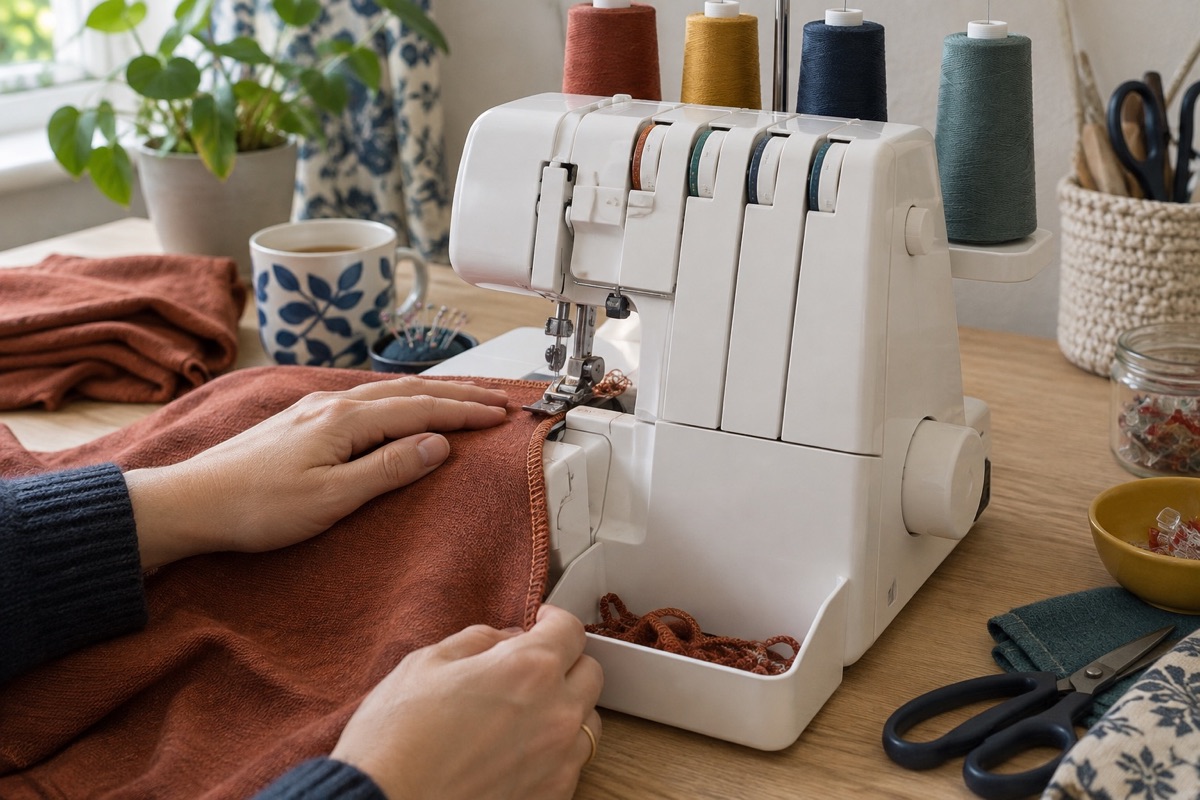
An overlocker trims the raw edge while wrapping it in thread. It is fast, neat and especially useful for stretch garments—but it does not replace the ordinary sewing machine that inserts a zip, topstitches a pocket or makes a conventional buttonhole.
The three-machine distinction
An overlocker is primarily an edge-finishing and seam machine. A coverstitch machine makes the parallel rows and looper finish seen on many knit hems. A combination machine can switch between both, though conversion time and threading complexity matter as much as the saved table space.
For a new sewist, the sensible order is usually a dependable sewing machine first, then an overlocker when garment volume or stretch fabric justifies it. Coverstitch comes later unless knitwear is the main event.
Features that change the experience
Colour-coded thread paths, accessible lower loopers, differential feed, a usable scrap catcher and clear tension guidance can matter more than maximum stitch speed. Air threading reduces one source of friction, but it brings a sizeable price jump and does not remove every threading step.
Start with the question closest to yours
- Choosing a first machine: compare three current models in best overlockers for beginners.
- Deciding whether to buy: use do you need an overlocker? to test the purchase against the projects you repeat.
- Separating machine types: read overlocker vs sewing machine or overlocker vs coverstitch.
- Learning the setup: follow the safe, manual-led overlocker threading guide.
- Fixing stretched or puckered edges: learn a one-variable test in differential feed explained.
For the next specialist decision, compare dedicated coverstitch machines for knit hems or decide whether air threading is worth its premium. Once you own an overlocker, choose three versus four threads by seam job, read tension symptoms with a four-colour sample, and use the wavy-seam checklist when jersey stretches through the feed.
The guides use current UK product specifications and official manuals, while keeping model-specific threading and safety instructions with the manufacturer.