
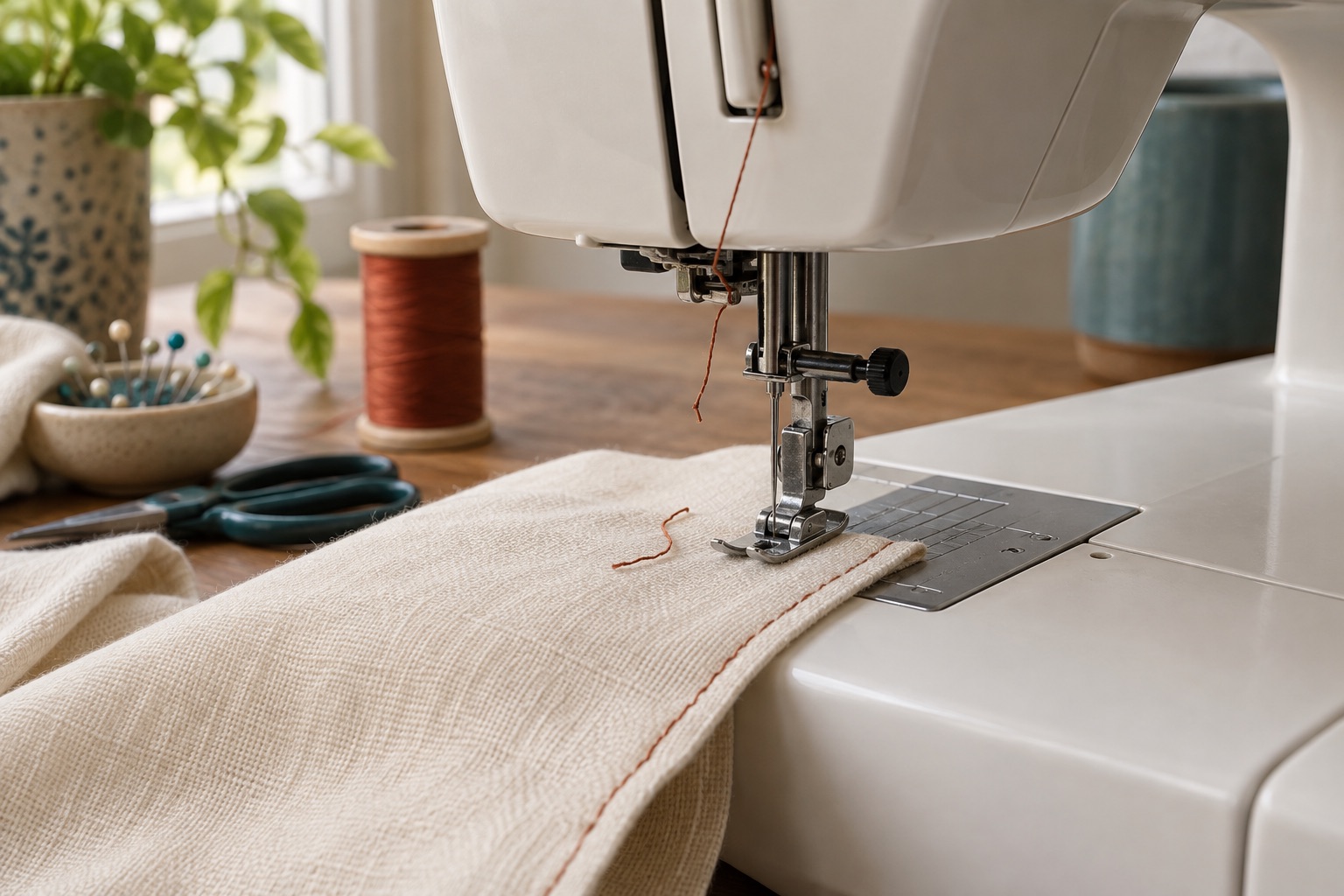
An upper thread that repeatedly snaps can look like a tension fault, but the thread may be catching anywhere between spool and needle. The most useful first question is where it breaks. Stop sewing and keep the broken end if it helps you spot fraying or a clean snap. Do not keep driving the machine through the project: broken thread can tangle around the hook and turn a simple threading error into a jam.
What does the break location tell you?
If thread breaks above the needle, watch whether it catches under the spool cap, wraps around the spool pin, misses a guide or snags at the take-up lever. A spool that cannot rotate or unwind in the arrangement specified by the manual can pull the thread taut. If it frays at the needle eye, check for a bent or blunt needle, a needle eye too small for the thread, a needle fitted the wrong way or thread rubbing on a damaged eye. If the break appears after fabric penetration, inspect the visible needle plate and presser-foot opening for a nick caused by a prior needle strike. A burr can repeatedly cut thread; do not dismantle the hook or file the plate without model-specific service instructions.
A sudden snap only when crossing a thick seam may instead reflect needle deflection or pulling the fabric. Let the feed dogs advance it and use the bulky-seam method rather than pressing harder on the pedal.
Reset the upper path before adjusting tension
- Switch off. Remove the upper thread completely, including any strand wound around the spool pin or take-up area. Bring the needle to the threading position in your model's manual.
- Raise the presser foot and rethread from the spool through each guide, tension path, take-up lever and needle-bar guide. Confirm the spool cap suits the spool; do not trap the thread beneath it.
- With power off, replace a bent, blunted or suspect needle. Insert it fully in the orientation and system specified for your machine. Match its size to thread and fabric. The needle-type guide covers woven versus stretch materials.
- Check the bobbin is correctly seated and the needle can move freely as the manual permits. An upper-thread break can be caused by a lower-area jam, so do not ignore thread nests beneath the plate.
For a control sample, a sound all-purpose machine thread is more useful than an old, fuzzy or hand-sewing spool. The linked Gütermann Sew-All is white: it is a practical light-fabric test option, not a colour recommendation for every project. If your existing thread pulls smoothly and is appropriate for the machine, no purchase is needed.
Gütermann Sew-All polyester thread, white
A reliable general-purpose thread family for mixed garment fabrics; choose the shade that blends with your project rather than buying white by default.
A 100 m spool of 100% polyester Sew-All thread for everyday construction seams, repairs and machine sewing.
Keep in mind
- The linked listing is white; match colour locally if needed.
- It is not the same as a deliberately heavy decorative topstitch thread.
The SCHMETZ universal assortment is a replacement option for machines specifying domestic 130/705 H needles and common woven fabrics. Choose the right size; a larger needle is not a universal fix for breakage, and elastic knits may need a different point.
SCHMETZ Universal needles, assorted sizes
A practical starting pack when the machine manual specifies the flat-shank 130/705 H system and your projects vary in fabric weight.
A ten-needle assortment spanning 70/10 to 100/16 for sampling fine-to-medium woven fabrics and ordinary sewing thread.
Keep in mind
- Universal point is not the first choice for very elastic knits.
- Check the needle system in your machine manual before buying.
Test on a controlled scrap
Restore the usual stitch and upper-tension settings in the manual. Sew a straight line at a moderate pace through two layers of the actual project fabric. If it works with a fresh ordinary thread but fails with the original spool, the original thread or its delivery from the spool deserves attention. If the same thread breaks only with a different fabric, revisit needle type, size and seam bulk. If it breaks at a fixed point even on stable cotton with a new needle, stop and examine accessible contact surfaces under good light.
Only after a correctly threaded control sample should you try a small upper-tension adjustment. Record the starting number and test one step at a time using the tension guide. Do not turn a bobbin-case screw to correct a snagged upper thread.
When is this a repair rather than a setting?
Stop, unplug and contact the maker, dealer or a technician if the needle strikes the plate, a visible burr keeps fraying thread, the handwheel binds, the machine makes a new mechanical knock or breaks multiple fresh needles. Internal timing, electrical work and hook-surface repair are not first-user adjustments. Our service decision guide explains what information to take to the appointment.
Frequently asked questions
Why does thread break as soon as I start sewing?
Check the upper path, take-up lever, needle threading and thread tails first. Then inspect whether the thread is trapped at the spool or fabric is being pulled. Test on cotton before altering tension.
Can high tension break upper thread?
Yes, but a missed guide, poor spool delivery or damaged needle can feel similar. Return to the normal setting, rethread and test before making a small measured change.
Is this the same as bobbin-thread breakage?
No. Identify which thread ended or ran out. The bobbin-thread guide checks winding, insertion, case and compatible parts instead.
Sources
Brother's common sewing-machine problems guide prioritises correct upper threading and suitable machine thread. Janome UK's maintenance and troubleshooting guide links thread breakage to threading, needle condition and thread quality. Use your exact model manual for threading order and service limits.