
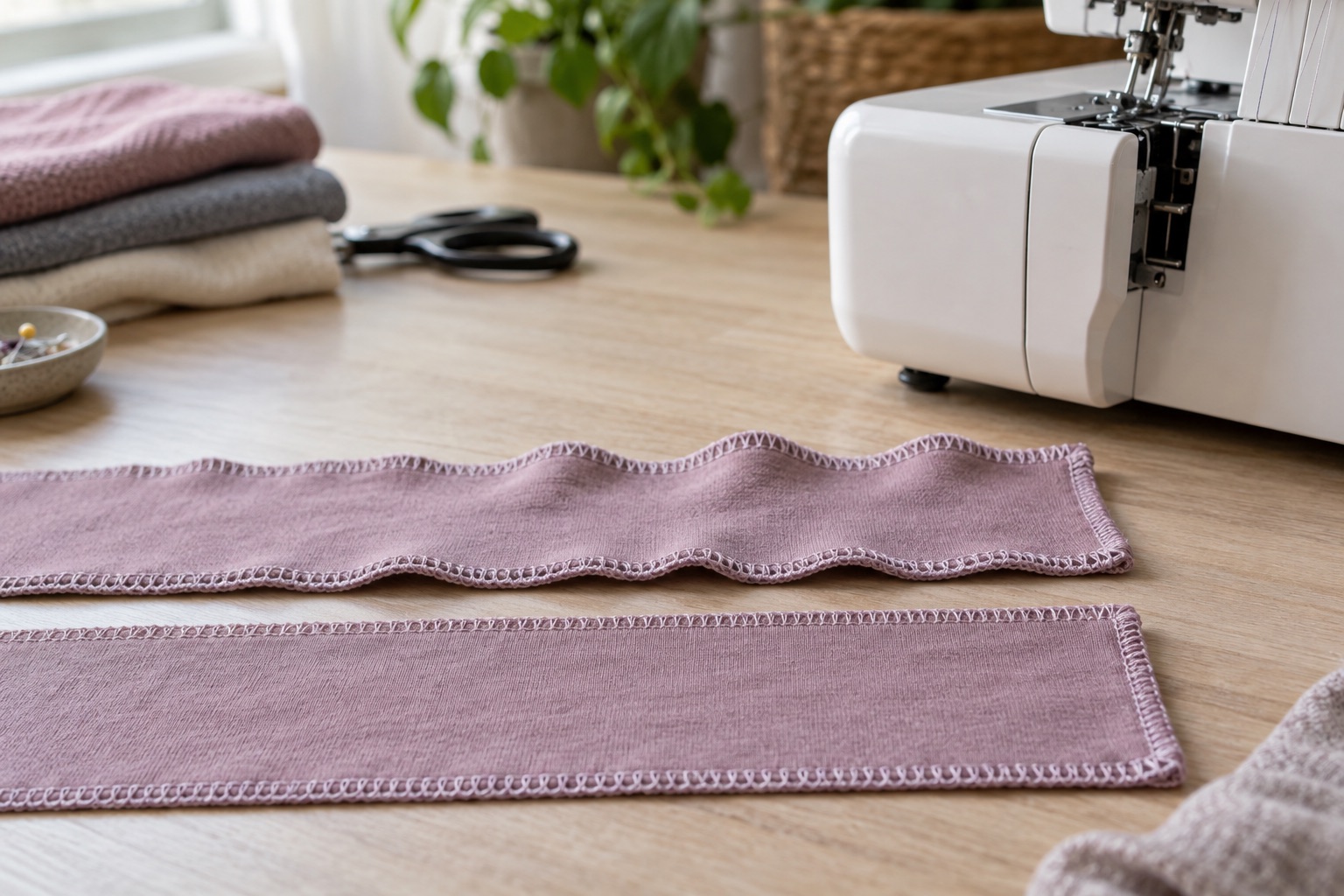
A wavy overlocker seam is common on lightweight jersey and ribbing. The machine has transported or stitched a stretched edge, which relaxes into ripples after it leaves the foot. The goal is not to flatten a badly fed seam by pulling harder. Diagnose when the distortion appears and whether the fabric itself, the cut edge or the thread wrap is changing shape.
Which part is actually waving?
Lay the unsewn edge flat next to the stitched sample. If the whole stitched edge lengthened, feed stretch is likely. If only the folded thread-covered edge rolls inward or forms a hard cord, cutting width or looper balance may be the issue. If the stitch line itself is puckered into tiny pleats, check needle tension and foot pressure as well. A deliberate rolled hem or lettuce edge is a different setup, not a fault to “fix” with a four-thread construction seam.
Check the fabric grain. A crosswise knit edge may behave differently from a lengthwise one. Cutting a control sample in the wrong direction can make a successful setting look inconsistent.
A controlled fix sequence
- Return to a known stitch. Rethread if the chain is irregular; install suitable needles, then choose the manual's four-thread knit-seam baseline or the actual intended stitch.
- Stop pulling. Support the fabric's weight on the table and guide it gently without stretching it in front of or behind the foot. Do not push fabric into the knife.
- Adjust differential feed one step. On many machines, a ratio above neutral makes the front feed deliver more fabric and counteracts stretch; the dial direction and range vary by model. The full differential-feed guide explains the mechanism.
- Sew an identical sample. Mark each ratio on a strip. Choose the flattest seam that still feeds evenly; excessive correction makes gathers.
- Then inspect foot pressure. Some machines permit a lower pressure for a delicate knit. Follow the manual and change only this variable after the feed trial.
The goal is a flat seam after the sample has relaxed, not just while it is held under the foot. Let the swatch rest briefly before judging it.
If differential feed does not solve it
Check cutting width: loopers need enough fabric to wrap but should not pull an overly broad allowance into a ridge. Verify the stitch finger and rolled-hem lever are in the correct position. Use the tension guide if one looper colour spills disproportionately over the edge. A damaged knife, bent needle or misthreaded path can create a seam that looks like a feed problem. If the edge waves on stable woven cotton too, and the machine resists or strikes, stop and arrange service.
For a finished garment, pressing may relax a slight wave on a suitable fabric, but it should not be used to disguise a severely stretched seam. Test the fabric's heat tolerance on a scrap and avoid dragging the iron along the edge.
What if I want a lettuce edge?
An intentional lettuce edge deliberately stretches a light knit while a narrow rolled hem is stitched. It is a decorative effect, not a substitute for a flat construction seam. Change back to your recorded four-thread setting before joining the next garment pieces. Keep a labelled sample card so the decorative setup does not become your accidental default.
Frequently asked questions
Which way should I turn the differential dial?
Use your manual's direction, because labels differ. For many models, raising the ratio above neutral counters stretching; test a small increment rather than jumping to maximum.
Should I use stabiliser?
Temporary support can help a difficult knit, but first correct feed, handling and stitch selection. Test whether any stabiliser removes cleanly and changes the hand of the finished seam.
Why is only one side of the fabric wavy?
The two layers can feed differently, particularly if one is slippery or heavier. Test with the same layer order and support both pieces evenly.
Sources
The feed mechanism and differential-control guidance are grounded in the official Janome overlocker guide, Brother 2104D specifications and baby lock enspire's differential-feed explanation.