
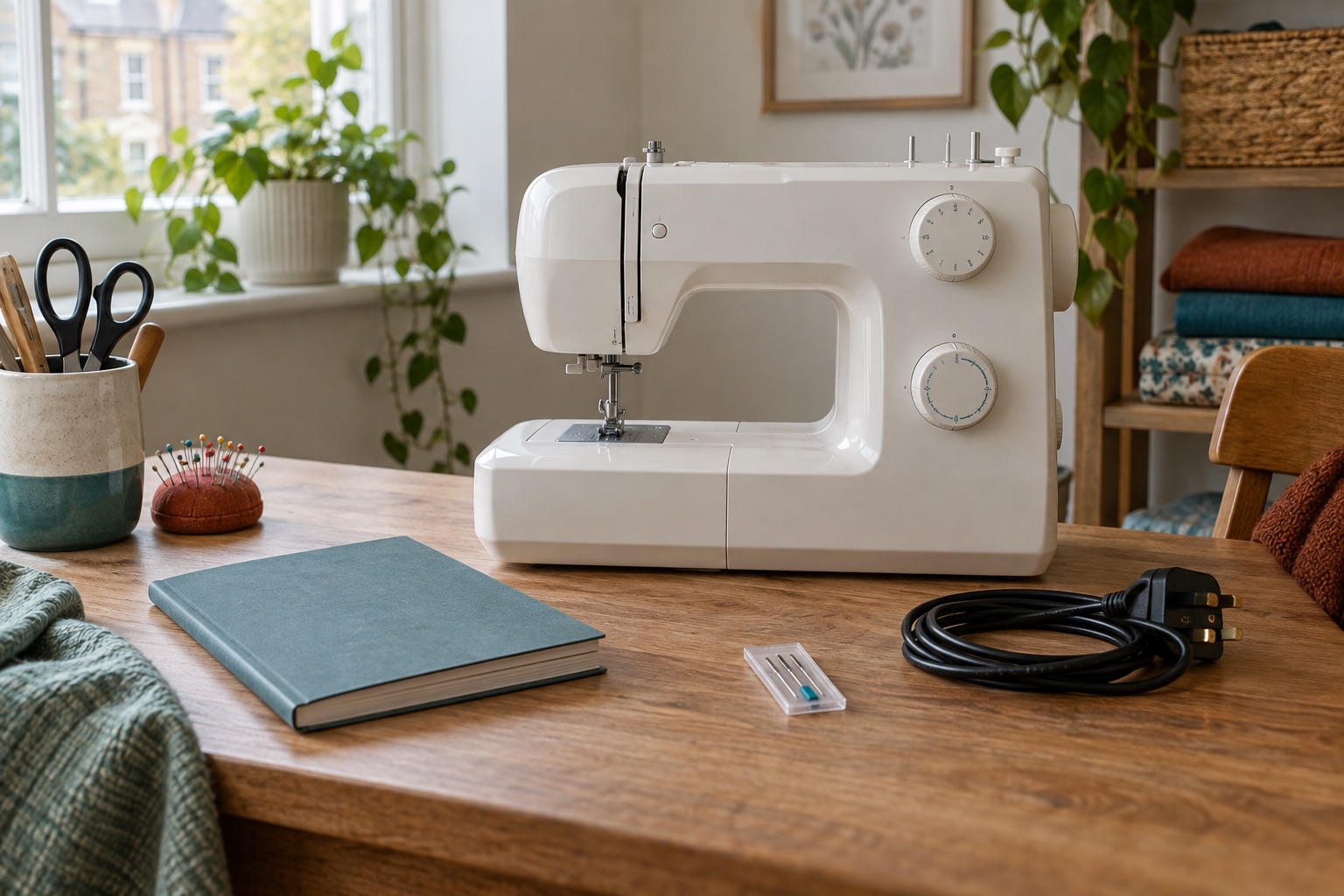
Some sewing-machine problems are safely solved at the table; others become more expensive if you run the motor once more. The dividing line is not how annoying the fault is, but whether it points to a hazard, a collision, internal damage or a problem that persists after controlled owner checks. This guide is a decision aid for domestic machines, not permission to open electrical covers or reset timing.
Stop using and unplug the machine now
Do not power it again if you notice a burning or hot electrical smell, smoke, a damaged mains lead or pedal, liquid entering the body, sparking, exposed wiring or a loose moving cover. Keep the machine away from use and contact the maker or an appropriate qualified repairer. If a household electrical emergency is present, follow local emergency advice; do not troubleshoot the machine yourself.
Mechanical stop signs include a handwheel that will not turn gently after accessible thread is cleared, repeated needle strikes against the foot or plate, a hard grinding or knocking sound, missing broken-needle fragments, or a bobbin case that will not seat. Stop immediately if the needle keeps bending or breaking. Forcing a handwheel or pedal against a jam may damage the hook, timing or drive.
Also stop if the machine is within a warranty or return process and an internal repair could compromise that route. Check the maker's conditions before authorising third-party work.
What is reasonable to check yourself?
With power off and the manual open, a user can usually replace a needle, remove and rethread the upper path, seat the exact bobbin, lift out accessible thread tangles and clean lint from areas expressly shown for owner maintenance. Follow the model's instructions on opening covers, brush use and oiling; some machines have no user-oiling step. A fresh, suitable needle and two layers of plain woven cotton make a useful control sample.
Our guides cover upper-thread breakage, lower-thread breakage, fabric not feeding, jams and cleaning. If the symptom disappears on the control sample, the cause may have been thread path, needle or project fabric. If it remains with normal settings and correct parts, stop repeating the same test. Do not turn hidden screws, dismantle the hook, remove electrical covers or try to file a burr.
There is no universal calendar interval at which every domestic machine must be serviced. Usage, maker guidance, storage and symptoms matter. A machine used intensively may merit preventative inspection; a rarely used but dry, clean machine may first need a careful setup. Follow the service advice for your model rather than a blanket schedule.
Choose the right service route
For a recent purchase, check retailer and maker support or warranty before paying for repair. An authorised dealer can advise whether a fault is covered and what transport or inspection rules apply. For an older machine, seek a technician experienced with its make and mechanical or computerised system. Ask for an assessment and estimate before approving substantial work. In the UK, Janome provides an authorised retailer search; other makers have their own support routes.
A built-in needle threader that fails while normal sewing works may be less urgent than a hook strike, though a protruding damaged part still deserves prompt attention. Conversely, electrical warning signs are urgent even if the stitch still looks acceptable.
What to tell the technician
Note the make and exact model number, the symptom and when it began, whether it occurs on a plain-cotton test, the needle and thread used, any error code, and what safe checks you already tried. Bring the foot, bobbin and power/pedal equipment if the repairer requests them, plus purchase or warranty details if relevant. A photo of the stitch or a short sample can help, but do not run the machine again just to make a video of a hazardous fault.
After service, ask what was repaired and whether any model-specific owner maintenance or part compatibility changed. Retest with an ordinary seam before returning to a complex garment.
Frequently asked questions
Is a skipped stitch always a repair job?
No. A fresh, suitable needle and correct threading often solve it. Seek service when the problem persists on a controlled sample or comes with collision, noise or binding.
Should I remove the casing to clear trapped thread?
Only remove owner-access covers and parts explicitly described in your manual. Internal covers and electrical sections are for qualified service.
How much should a sewing-machine service cost?
There is no reliable universal price: model, fault, parts and local labour vary. Ask for an assessment and estimate before authorising work.
Sources
Brother's common-problems guidance distinguishes routine checks from faults that need help. Janome UK's maintenance and troubleshooting guide sets out owner-care limits and common faults. Use the exact model manual, warranty terms and maker's repair channel for any decision to open or service the machine.