
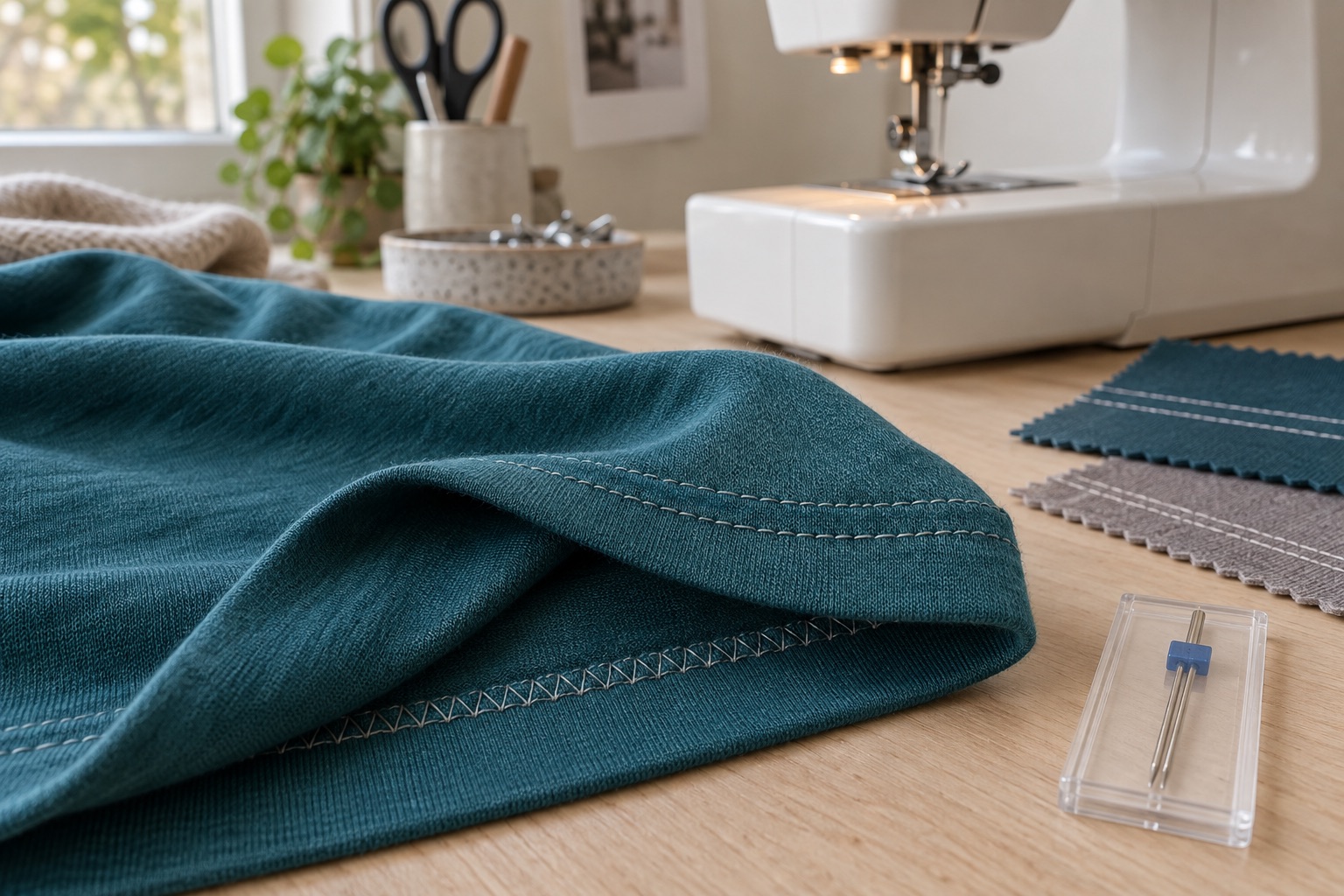
A twin needle makes two parallel lines of topstitching on the right side, while a single bobbin thread forms a zigzag underneath. It can resemble a shop-bought T-shirt hem without a coverstitch machine. The method is simple once fitted correctly, but a wrong foot, needle position or spacing can cause a hard collision. Compatibility comes before speed.
Confirm the machine can take the needle
Check the manual for twin-needle use and the required needle system. SCHMETZ offers a Stretch Twin in 2.5/75 and 4.0/75; the first number is the distance between needle points in millimetres, the second is the needle size. Do not assume a machine's advertised maximum zigzag width means every twin-needle and foot combination is safe. Fit the specified zigzag-capable foot and plate, select the manual's twin-needle mode if provided, and turn the handwheel by hand to prove neither needle touches metal or plastic.
The 4.0/75 option below can make a clear double row on a T-shirt hem. A narrower 2.5 mm version may behave better on fine jersey or a machine with less usable clearance. Buy only after checking the exact machine.
SCHMETZ Stretch Twin needle 4.0/75
For a compatible zigzag-capable domestic machine with sufficient needle-plate and presser-foot clearance, after a handwheel collision check.
A 4 mm-spaced twin needle with Stretch-needle geometry for two parallel rows on knit hems and a zigzag bobbin thread beneath.
Keep in mind
- A 4 mm gap will not fit every foot or stitch-width setting.
- Tunnelling may still require stabilisation, tension or spacing tests.
Set up two top threads correctly
Switch off before changing the needle. Seat the twin needle fully as directed. Put two spools on the machine's normal and auxiliary spool pins, using spool caps as instructed. Thread them together through shared upper guides only where the manual permits, then separate them at the last guide and thread each eye individually. Some machines specify a different path for the second thread. Do not improvise when the manual gives a route. One normal bobbin remains below.
Use compatible thread of the same general weight in both top spools for a first sample. Wind a spare bobbin as the second top source only if the manual permits it and you have a secure auxiliary-pin arrangement. Begin with the manual's normal tension and stitch length; any adjustment comes after seeing the test.
Make a representative test hem
Fold and press a piece of the actual knit to the planned hem depth. Baste or use suitable removable tape outside the needle path if the fold slips. Place the raw edge under the left/right needle positions so the underside zigzag straddles or covers it as intended, without stitching off the fabric. Support the rest of the garment on the table; do not pull it through. Sew slowly and inspect both sides after the fabric relaxes.
SCHMETZ suggests a water-soluble backing under some jersey hems to reduce a raised tunnel between the rows. Test that it removes cleanly from your fabric. A twin hem has some elasticity, but not unlimited stretch. Gently stretch the sample to the degree the garment must move during dressing; if stitches pop, choose another hem method.
Jersey single needles are useful for constructing the garment before hemming. The assorted SCHMETZ pack below is a sensible companion for stable cotton jersey, but it is not a substitute for the twin needle at the hem.
SCHMETZ Jersey needles, assorted sizes
Useful for cotton T-shirts and other stable jersey when a universal needle snags knit yarns or gives an untidy seam.
A medium-ballpoint 130/705 H SUK assortment for ordinary knitted fabrics, with sizes 70/10 to 90/14 to test against jersey weight.
Keep in mind
- For highly elastic fabric with skipped stitches, a Stretch needle may be better.
- A compatible machine and correct size still need checking.
Read the symptom before changing settings
Tunnelling: test a narrower twin-needle spacing, lighter top-tension adjustment per the manual, or removable backing. Skipped stitches: rethread both paths, fit a fresh compatible Stretch Twin and check fabric support. Snapped hem when stretched: the seam needs more extension; try a narrow zigzag or coverstitch instead. Needle strike: stop immediately, replace any bent needle and re-check mode, position, foot and plate. Wavy hem: stop pulling, support the cloth and test feed/pressure changes where your machine allows.
Do not use a twin needle for a zigzag or decorative stitch unless the machine manual explicitly confirms the combination and a full handwheel clearance check passes.
Frequently asked questions
Is a twin-needle hem the same as coverstitch?
No. It gives a similar pair of top rows, but the underside is one bobbin-thread zigzag rather than a coverstitch looper structure. See our overlocker vs coverstitch comparison.
Why are the rows raised in the centre?
This is tunnelling, often influenced by fabric support, top tension and needle spacing. Test a narrower twin needle and removable stabiliser before making large adjustments.
Can any straight-stitch machine use a twin needle?
No. The machine needs the specified twin-needle compatibility and physical space for both needles in the foot and plate.
Sources
Sizes and compatibility follow SCHMETZ's Stretch Twin specification, twin-needle overview and jersey sewing guidance. Follow the machine's own manual for two-spool threading and allowed stitches.