
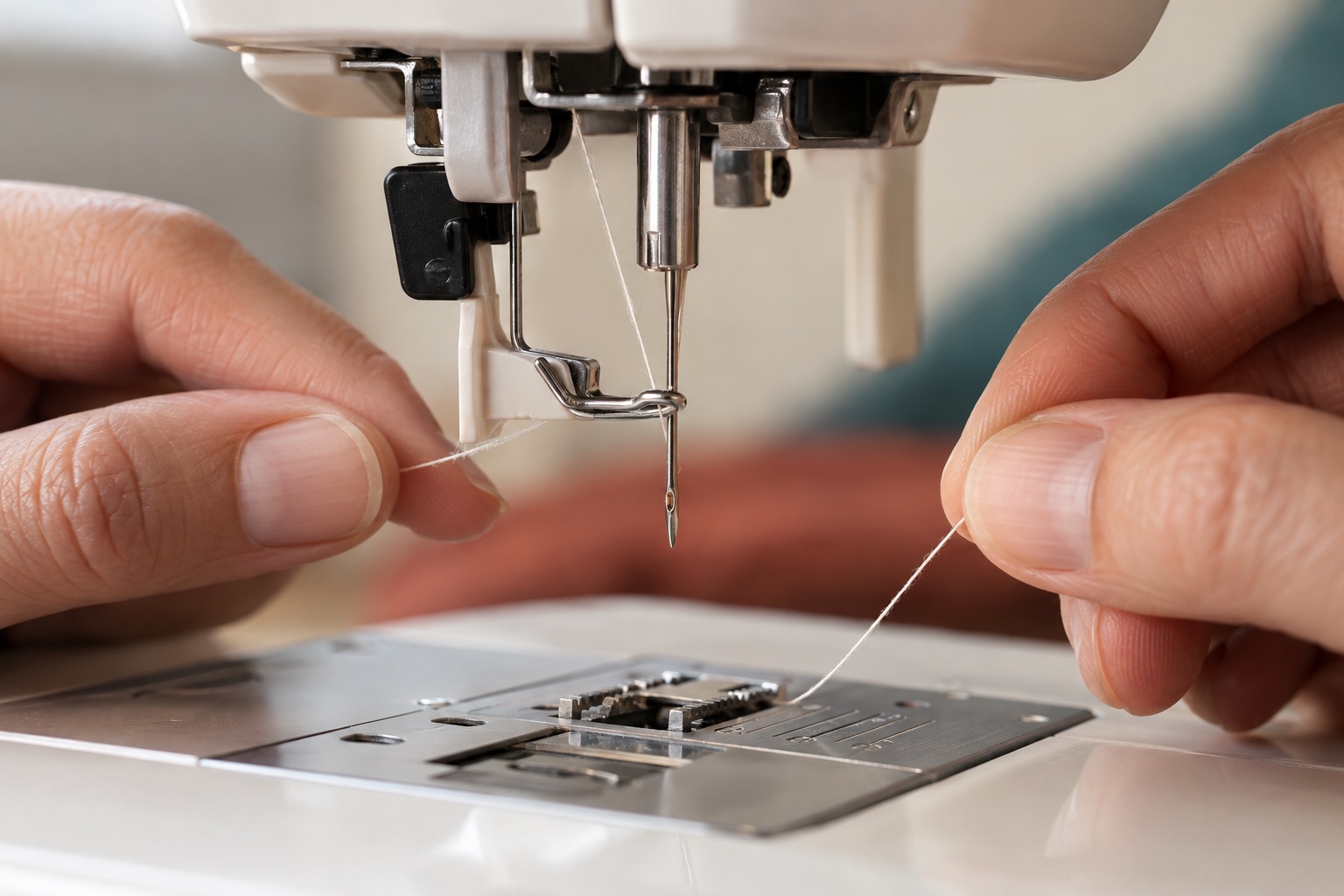
A built-in needle threader saves fiddly work, but its tiny hook must pass through the needle eye at the correct height. If it misses, first check the needle position, needle installation and threader sequence. The machine may still sew perfectly when threaded by hand. Avoid pulling the lever harder: that can bend a hook that merely needed the needle raised.
Which part of the action fails?
If the lever will not move through its normal travel, stop; do not force a stuck mechanism. If it moves but the hook misses the eye, suspect needle height, seating, rotation or an unsupported fine needle. If the hook enters but does not catch thread, look at the threader's small guide, the way the thread is held and a frayed or unusually thick strand. If a loop forms but slips away, follow the release order shown in the manual and pull the loop through gently with the machine off.
After a needle strike or break, inspect the threader's visible hook under good light without touching or bending it. A hook that no longer lines up is a repair question, not an invitation to reshape it with pliers.
Reset the needle and threader
- Switch off. Raise the needle using the handwheel or needle-position control exactly as the manual says; some machines specify a particular stop position rather than merely “near the top”.
- Confirm the needle is fully seated, correctly oriented and undamaged. Replace a bent needle. Use the needle system the maker approves. Certain threaders cannot handle the smallest needle sizes or special needle eyes; check your model's limit rather than relying on a universal size rule.
- Rethread the upper path with the presser foot up if the manual requires it, then bring thread around the dedicated needle-threader guide. Keep a manageable tail and use the lever motion and release sequence shown for your machine.
- Try once with ordinary smooth machine thread and a supported needle. Do not keep cycling an apparently misaligned hook through the eye.
A threader fault is not by itself a reason to buy a new pack of needles, foot or machine. Replace a needle only when it is damaged, unsuitable or incorrectly specified. If upper thread also breaks during sewing, diagnose the breakage separately.
Can you sew without the automatic threader?
Usually yes, provided the needle, machine and stitch operation are otherwise sound. Switch off and pass the thread through the needle eye manually in the direction specified by the manual, using adequate light. Pull the tail under the presser foot as directed, then make a short scrap-fabric test. Do not operate a damaged or loose threader if it obstructs the needle's movement.
This distinction matters: a failed convenience mechanism does not mean the sewing hook or stitch-forming mechanism has failed. But if the needle also strikes metal or the handwheel binds, stop sewing.
When does the threader need service?
Ask the maker, authorised retailer or technician if the hook is visibly bent, the lever sticks, a correct needle at the proper position is repeatedly missed, or the threader was damaged in a needle collision. Note the model number, needle type and what the lever does. Our technician guide covers what to bring and which symptoms are urgent.
Frequently asked questions
Does every needle work with a built-in threader?
No. Minimum eye size and compatible needle types vary by model. Check the manual before assuming the threader is broken.
Can I bend the little hook back into line?
No. It can snap or strike the needle. Arrange service if it is visibly out of alignment.
Can I still thread the needle by hand?
Usually, yes, if nothing obstructs the needle and the rest of the machine runs normally. Power off while threading.
Sources
Brother's common sewing-machine problems guide identifies needle position, installation and the delicate threader hook as checks. Exact threading sequences and needle-size limits vary, so this guide defers to the manual for the reader's model.