
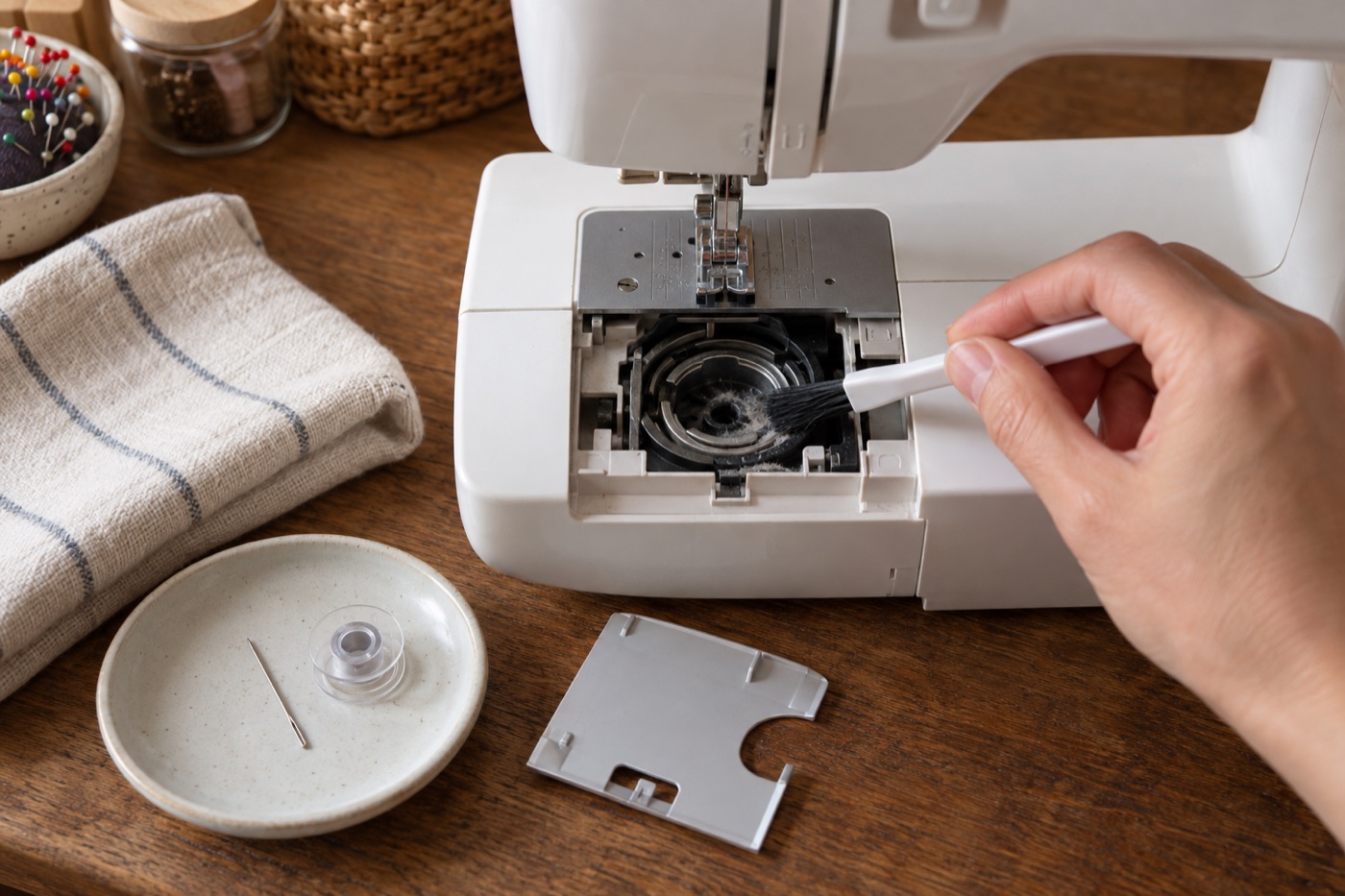
Lint collects where thread and fabric pass through the machine, especially around feed dogs and the bobbin race. A light routine clean can prevent rough feeding and false “tension” problems, but the amount of disassembly varies sharply by model. Treat the manual's cleaning diagram as the boundary of ordinary home maintenance.
Prepare before opening the bobbin area
Switch off, unplug at the wall and remove the foot controller connection if your manual requires it. Let the lamp and motor cool. Raise the needle and presser foot. Remove the needle and foot as the manual shows, storing the needle safely so it cannot roll into the machine. Take out the bobbin. If the manual permits removing the needle plate or bobbin case for cleaning, use the supplied tool, retain every screw in a dish and note how the case aligns before lifting it out. Do not remove a part whose replacement position you cannot identify.
Brush, do not blast
Use the small lint brush supplied with many machines or a soft dry brush of similar size. Sweep lint gently from the accessible feed-dog teeth, needle-plate opening and bobbin race. Lift loose thread fragments with tweezers only where the manual permits and where you can see the full piece. Do not push the brush into the motor housing, hook timing parts or electrical openings. Brother specifically says compressed-can air is not recommended for its named bobbin-race procedure. It can move lint to places you cannot clean. Avoid soaking the area, spraying cleaner or applying household oil.
For the Brother model in its cleaning instructions, the bobbin case is not to be oiled. Other machines have different lubrication rules, so never generalise “oil after every clean”. Use only the specified sewing-machine oil at the locations and interval stated by your exact manual, if it calls for any at all. A scratched bobbin case should not be polished at home; Brother warns it can snag thread and affect needle safety.
Reassemble before a control seam
Seat the case against its alignment marks, refit the plate and covers, and tighten screws as the manual directs without over-tightening. Turn the handwheel gently through a full cycle before plugging in; stop if there is a new scrape or strike. Fit a fresh needle if the old one is bent, blunt or has hit the plate. A SCHMETZ Universal assortment is a useful woven-cotton control for a compatible 130/705 H machine, not a substitute for the model's needle-system check.
SCHMETZ Universal needles, assorted sizes
A practical starting pack when the machine manual specifies the flat-shank 130/705 H system and your projects vary in fabric weight.
A ten-needle assortment spanning 70/10 to 100/16 for sampling fine-to-medium woven fabrics and ordinary sewing thread.
Keep in mind
- Universal point is not the first choice for very elastic knits.
- Check the needle system in your machine manual before buying.
Rethread with the foot up and use two layers of plain cotton for a short test seam. Good machine-sewing thread reduces the chance that an old fuzzy spool is mistaken for a cleaning failure; the Sew-All card below is a specific white spool, so choose colour separately for the real project. Observe whether the fabric advances smoothly and the stitch locks on both faces.
Gütermann Sew-All polyester thread, white
A reliable general-purpose thread family for mixed garment fabrics; choose the shade that blends with your project rather than buying white by default.
A 100 m spool of 100% polyester Sew-All thread for everyday construction seams, repairs and machine sewing.
Keep in mind
- The linked listing is white; match colour locally if needed.
- It is not the same as a deliberately heavy decorative topstitch thread.
When cleaning is not the repair
Stop and arrange service if the handwheel remains stiff, a case will not seat firmly, the needle strikes the plate, the motor smells hot, or the machine repeatedly nests after correct threading and accessible cleaning. Internal timing, wiring and lubrication beyond the manual are not routine DIY cleaning. A dealer can also replace a scratched bobbin case with the correct part.
Frequently asked questions
Can I use compressed air in the bobbin area?
Brother does not recommend canned compressed air in its named race-cleaning procedure. A soft brush is the safer default unless your exact manual states otherwise.
Should I oil the bobbin case?
Not by default. Brother explicitly says not to oil the bobbin case in its cleaning instructions. Follow your own manual's named points only.
How often should I clean the machine?
Follow the manual and clean sooner when visible lint builds up or feed and stitch quality change. Heavy shedding fabrics and frequent sewing create more lint than occasional light cotton work.
Sources
Brother's bobbin-race cleaning instructions provide the unplugging, brushing, compressed-air and bobbin-case cautions for a named model. Your machine's manual determines removable parts and lubrication.