
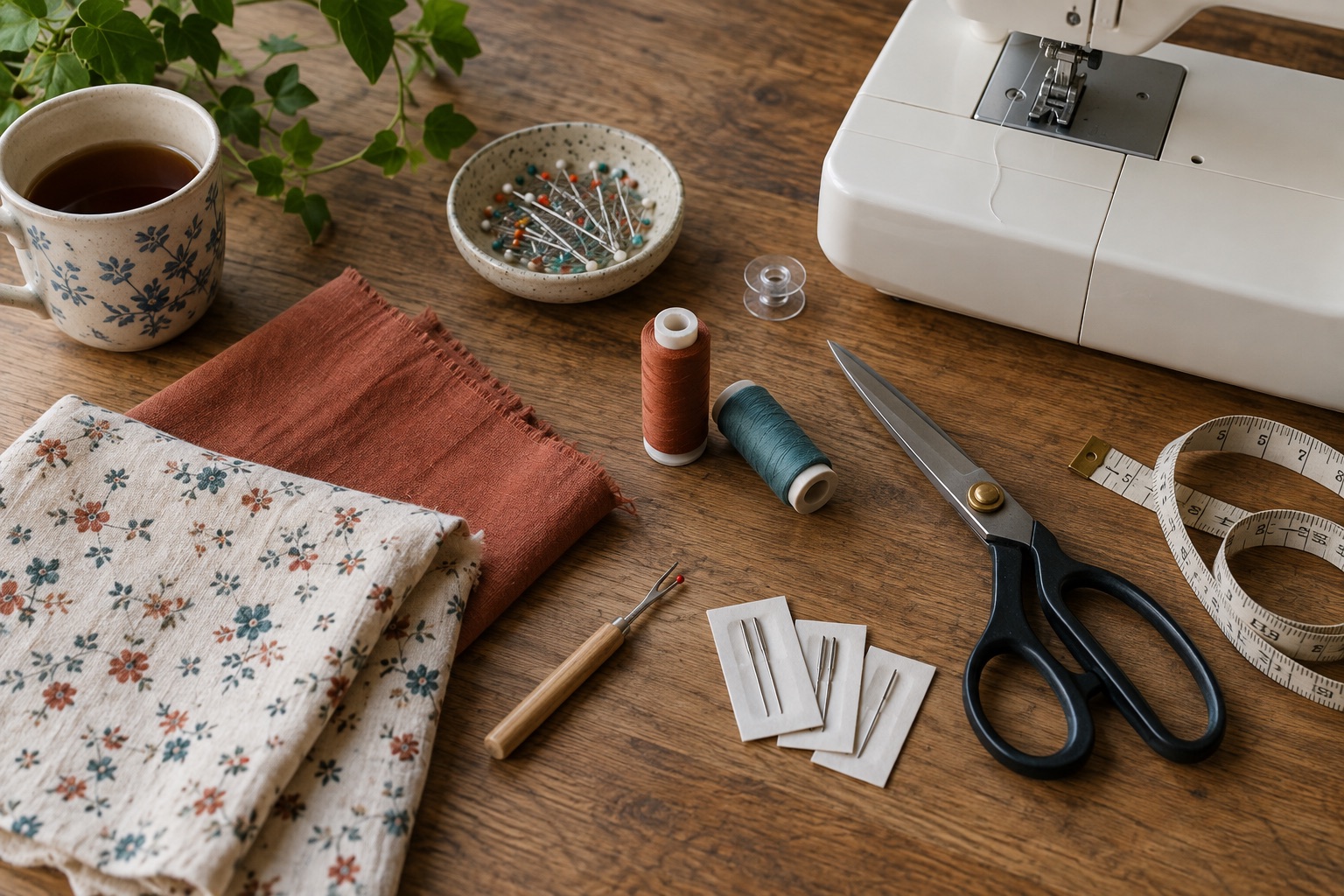
The most useful beginner kit is small enough to keep beside the machine. It helps you cut accurately, sew a controlled test and unpick a mistake without damage. It does not need a specialist foot for every technique. Start with a project in stable woven cotton; that choice keeps the needle, thread and handling requirements simple while you learn the controls.
What is already in the machine box?
Read the accessory list in your model manual before shopping. Many domestic machines include an all-purpose presser foot, a few bobbins, a needle, a seam ripper or brush and a screwdriver for specified adjustments. The exact contents vary by model and seller. Keep the supplied bobbin or its part code as your compatibility reference. A part that seems to fit physically may still be the wrong height or profile for the hook.
Set the machine on a firm table with space behind it for the fabric to leave the needle area. Use a comfortable chair, adequate light and a socket arranged so the foot-controller lead does not become a trip hazard. A separate cutting surface and an ordinary household iron make pressing and measuring easier; neither is a reason to buy a specialist sewing-room workstation immediately.
What belongs in the first small kit?
Fabric scissors should cut cloth cleanly; keep them for fabric rather than paper patterns. A tape measure or rigid seam gauge helps you check hems and the actual distance between needle and fabric edge. Dressmaker's chalk or a removable fabric marker provides temporary lines; test the mark on a hidden scrap because removal varies by fabric. Pins or sewing clips hold layers together, but remove pins before they reach the presser foot—do not sew over them. A seam ripper is a controlled way to unpick the inevitable practice mistake. An iron and ironing surface let you press a seam before judging how it sits.
For your first test seam, two pieces of inexpensive, prewashed woven cotton are enough. Cut a few spare squares so you can change one setting at a time. Use the machine's standard foot unless the manual or project calls for another. Our presser-foot guide explains what the specialist options actually solve.
Choose the right needle, thread and bobbin
A fresh universal needle suitable for medium woven cotton is a sensible starting point if the machine takes the domestic needle system listed on the pack. SCHMETZ universal needles are an example, but check your machine's specified needle system and the size required for the fabric. An assortment is useful later; you do not need to use its heaviest size on a light sample. See our needle type and needle size guides for the actual matching decision.
SCHMETZ Universal needles, assorted sizes
A practical starting pack when the machine manual specifies the flat-shank 130/705 H system and your projects vary in fabric weight.
A ten-needle assortment spanning 70/10 to 100/16 for sampling fine-to-medium woven fabrics and ordinary sewing thread.
Keep in mind
- Universal point is not the first choice for very elastic knits.
- Check the needle system in your machine manual before buying.
Use one sound all-purpose machine thread in the upper path and bobbin for the first test. The linked Gütermann Sew-All spool is white, so it is most practical for pale practice fabric; choose a project-appropriate colour when you sew the finished item. Avoid old thread that breaks easily or a decorative thread until the normal setup is working.
Gütermann Sew-All polyester thread, white
A reliable general-purpose thread family for mixed garment fabrics; choose the shade that blends with your project rather than buying white by default.
A 100 m spool of 100% polyester Sew-All thread for everyday construction seams, repairs and machine sewing.
Keep in mind
- The linked listing is white; match colour locally if needed.
- It is not the same as a deliberately heavy decorative topstitch thread.
Extra bobbins are convenient when you change colours, but only buy the exact part specified for your machine. The Brother SFB/SA156 pack below is for compatible Brother models, not for a Janome or a generic front-loader. Check the manual and our bobbin compatibility guide before ordering.
Brother 11.5 mm sewing-machine bobbins, pack of 10
A useful spare set after confirming the exact Brother model's bobbin part code in its manual or support page.
Ten 11.5 mm plastic bobbins for Brother machines whose manual explicitly specifies SFB or SA156; not a universal bobbin replacement.
Keep in mind
- Do not use if your machine specifies another bobbin height, shape or material.
- The Amazon title alone does not prove compatibility with every Brother machine.
What should wait until a project needs it?
Rotary cutters, cutting mats, speciality feet, large thread assortments and decorative needles can be valuable later, but they do not improve your first straight seam by themselves. A zip foot becomes useful when you actually make a zipped item; a walking foot becomes useful for certain layered or difficult-feeding jobs. Spend the first session threading, winding a bobbin and sewing an accurate straight line with the basics already at hand.
If a needle is bent, the power cable is damaged or the machine makes a new mechanical noise, stop and follow the manual or seek service. More accessories will not fix a damaged machine.
Frequently asked questions
Do I need an overlocker to start sewing?
No. A domestic sewing machine can construct many woven projects and finish edges in several ways. Our overlocker decision guide explains when a second machine becomes worthwhile.
Can I use any spare bobbin that came in a sewing kit?
No. Match the machine model and maker's bobbin specification. Similar-looking bobbins are not automatically interchangeable.
What should I buy if I already own scissors and an iron?
Check the machine-box accessories, then fill only the missing gaps: suitable needle and thread, measuring and marking tools, safe pins or clips, and a seam ripper.
Sources
Brother's machine setup guide covers the basic work surface, threading and first cotton test. Brother's model-specific bobbin guidance illustrates why exact-fit bobbins matter. Confirm the accessory list, needle system and maintenance cautions in your own machine manual.