
Match before you attach
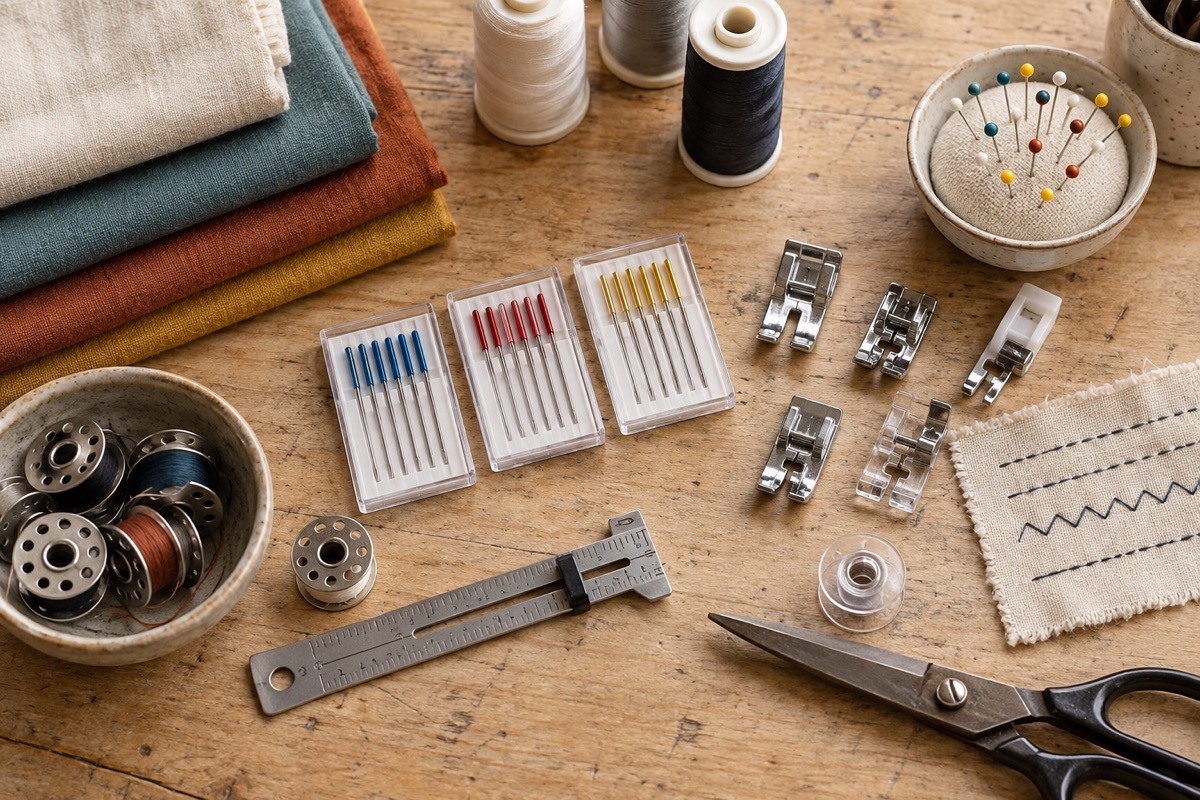
Needles, thread & presser feet
Check compatibility first, then choose the part that suits the fabric and finish.
Choose your route
Start with the question in front of you
Browse the collection
All guides in this section
Needles and thread
Fit and function
Feet by sewing task
Everyday cutting and tools
The useful context
Understand the choices
The right needle, thread, bobbin or foot can change more than a long menu of decorative stitches. The wrong one can create skipped stitches, puckering, thread damage or a part that does not fit the machine at all.
Start with the manual and machine family
Most modern domestic machines use the 130/705 H needle system, but the manual remains the authority. Bobbins that look similar may differ in height or profile. Presser feet need the correct shank height, attachment style and stitch-width clearance.
Type and size do different jobs
Needle type describes the point, scarf or eye designed for a fabric or thread. Needle size describes shaft diameter. Choose both: a stretch needle can still be too fine for the thread, and a larger universal needle does not become a denim needle simply because it is stronger.
Treat compatibility claims such as “universal fit” cautiously. A low-cost accessory is poor value if it strikes the needle plate or cannot form the intended stitch safely.
Needle and thread guides
Start with sewing-machine needle types to match the point to woven cotton, jersey, stretch fabric or denim. Then use needle sizes explained to choose a diameter that carries the thread without making excessive holes. If jeans and heavy seams are your repeat project, best needles for denim compares the useful 90/14–110/18 range in the context of an actual seam crossing.
Thread is a separate choice: polyester versus cotton sewing thread looks at garment movement, patchwork, care and appearance using named manufacturer thread families rather than blanket fibre rules.
Bobbins and presser feet
Before ordering extra bobbins, use bobbin types and compatibility to identify the exact part code for your model. A similar-looking bobbin is not necessarily a safe fit. Our presser-feet guide explains the all-purpose, zipper, buttonhole, quarter-inch, even-feed and free-motion options—and when the foot already in your machine's accessory drawer is enough.
Choose a foot by the seam you are making
For closures, start with zipper feet and distinguish an ordinary zip from a concealed one. For layered quilting or checked fabric that creeps, read walking feet. To tidy a woven raw edge on a domestic machine, compare overcasting feet with the other seam finishes. A subtle trouser finish calls for a blind-hem foot; a fine, narrow turned edge calls for a rolled-hem foot. For a visible line next to an edge or a less visible line in a seam, see edge-stitch and stitch-in-the-ditch feet.
Before purchasing any of them, separate low- versus high-shank geometry from snap-on versus screw-on attachment. Neither label alone proves that a foot fits your exact model or clears its needle.
Fill the first toolkit deliberately
If you are starting from an empty sewing box, our beginner sewing-kit comparison weighs two named ready-made sets against a short build-your-own list. For garment cutting, dressmaking shears explains why blade length, hand orientation and cutting space matter more than a long catalogue of similar scissors.