
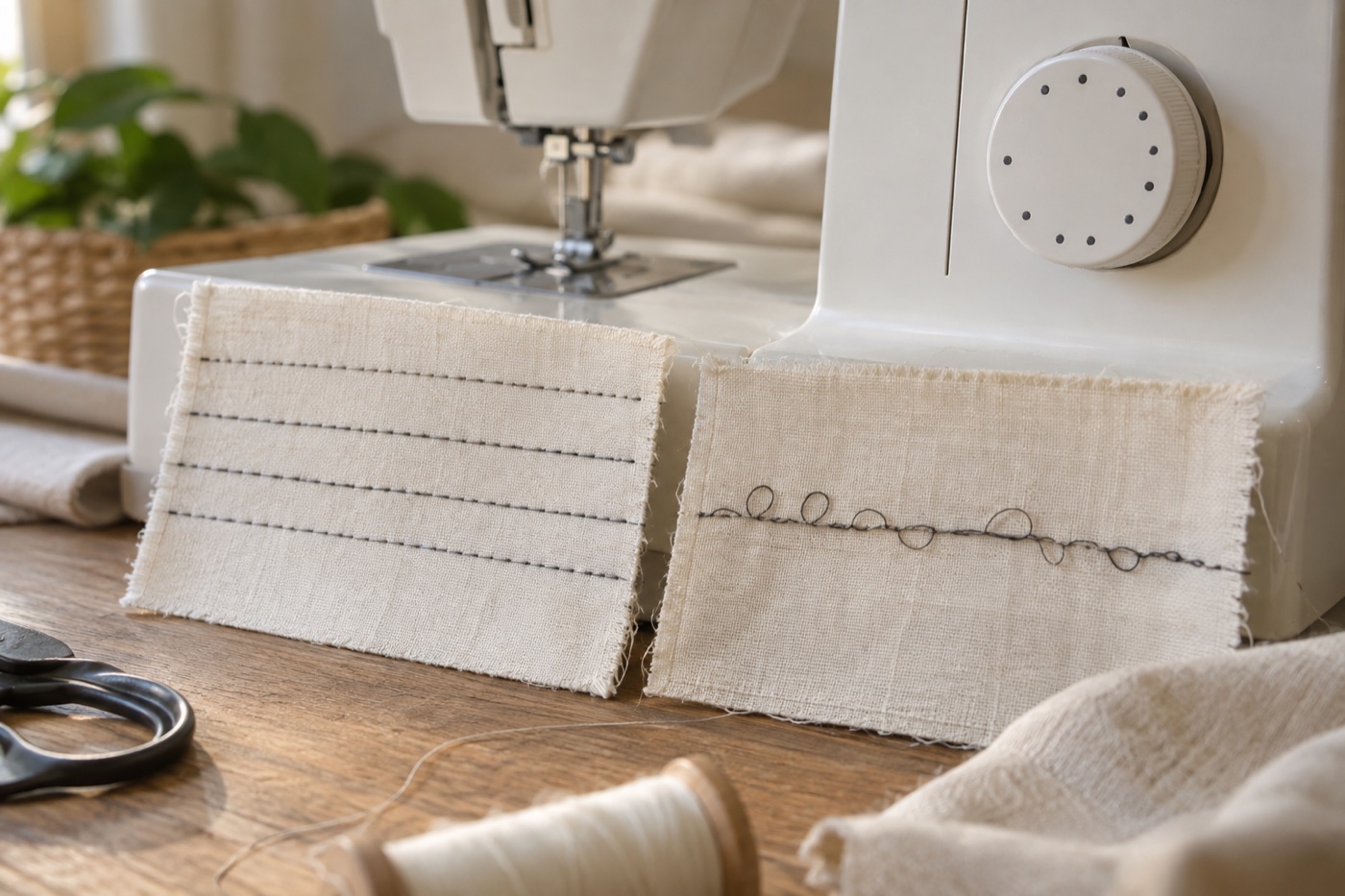
“Tension” is often blamed for any untidy stitch. In a lockstitch machine, upper and bobbin threads interlock within the fabric layers. A balanced straight seam on ordinary woven cloth shows tidy lines on both faces without loose loops. Thick, thin, stretchy and densely layered fabrics can change the appearance, so judge a sample made from the real project, not a single line sewn into air.
What the two sides tell you
If upper thread is pulled visibly to the underside in regular, small dots, upper tension may be relatively low for that thread, fabric and bobbin combination. If bobbin colour appears on top, upper tension may be relatively high. But a large tangled nest underneath is usually a threading-path problem, not a signal to turn the dial hard. The guide to thread bunching underneath starts with the take-up lever and raised-foot rethread.
Try two different thread colours only as a diagnostic on scrap, so you can see which line is being pulled across. Return to suitable matched thread for the project. Do not infer exact dial numbers from a photograph; machines and fabrics differ.
Build a trustworthy baseline
Raise the foot, remove the upper thread completely and thread the machine from the spool through every guide. Check the spool cap and take-up lever. Inspect the bobbin for even winding and correct insertion. Power off before replacing a dull or bent needle. Select a type and size appropriate to fabric and thread; a needle too fine for the thread can cause abrasion or skipped stitches that look like tension trouble.
An ordinary Sew-All polyester thread is a useful control against a fuzzy or inconsistent mystery spool. The Amazon card is a white 100 m example, not a recommendation that every seam should be white. The SCHMETZ Universal assortment is another control for common woven cotton, provided your manual specifies the 130/705 H needle system.
Gütermann Sew-All polyester thread, white
A reliable general-purpose thread family for mixed garment fabrics; choose the shade that blends with your project rather than buying white by default.
A 100 m spool of 100% polyester Sew-All thread for everyday construction seams, repairs and machine sewing.
Keep in mind
- The linked listing is white; match colour locally if needed.
- It is not the same as a deliberately heavy decorative topstitch thread.
SCHMETZ Universal needles, assorted sizes
A practical starting pack when the machine manual specifies the flat-shank 130/705 H system and your projects vary in fabric weight.
A ten-needle assortment spanning 70/10 to 100/16 for sampling fine-to-medium woven fabrics and ordinary sewing thread.
Keep in mind
- Universal point is not the first choice for very elastic knits.
- Check the needle system in your machine manual before buying.
Restore the manual's normal tension setting and stitch length. Sew a straight line on two layers of the actual fabric, with the correct foot down and the fabric supported. Label the sample with the setting. If it looks balanced, leave the dial alone even if a general internet chart suggests another number.
Change one variable at a time
If the upper thread is consistently loose after the baseline checks, increase upper tension a small increment; if bobbin thread is being pulled conspicuously to the top, decrease it a small increment. Retest after each change, recording the dial position and keeping the same sample stack, stitch and thread. Stop when the seam is balanced and lies flat; extreme dial settings are often a clue that something else is wrong.
Bobbin-case tension is usually set for the machine's normal bobbin thread. Do not loosen its screw to cure a missed upper guide or to make an incorrect bobbin work. Specialist decorative threads may require a manual-approved adjustment or a separate case, but that is an advanced, model-specific setup.
Puckers, skips and nests are not the same fault
Puckering may come from fabric handling, needle size, stitch length or a seam that is too tight. Skipped stitches point first to needle condition, type and insertion; see our skipped-stitch guide. Thread nests under the plate require a stop and safe clearance before sewing again. If a normal control sample still fails after rethreading, a fresh needle and accessible cleaning, the machine may need professional service. Do not open electrical or timed internal parts.
Frequently asked questions
What number should my tension be on?
Use the normal starting range in your exact manual. A printed “4” on one machine is not an absolute standard for all fabrics and machines.
Does bobbin thread showing on top mean I should tighten the bobbin screw?
No. First check the upper path and sample, then adjust upper tension in small steps if needed. Leave the bobbin-case screw alone unless the manual explicitly instructs otherwise.
Why did tension change after a new thread?
Different thread thickness, finish or spool feed can change stitch balance. Check needle-eye size and thread path, then make a new sample.
Sources
Brother's common sewing-machine problems guide prioritises raised-foot rethreading, correct bobbin insertion and needle checks before tension changes. Its upper-threading instructions explain why the presser foot must be raised. Use your model's manual for its normal setting.