
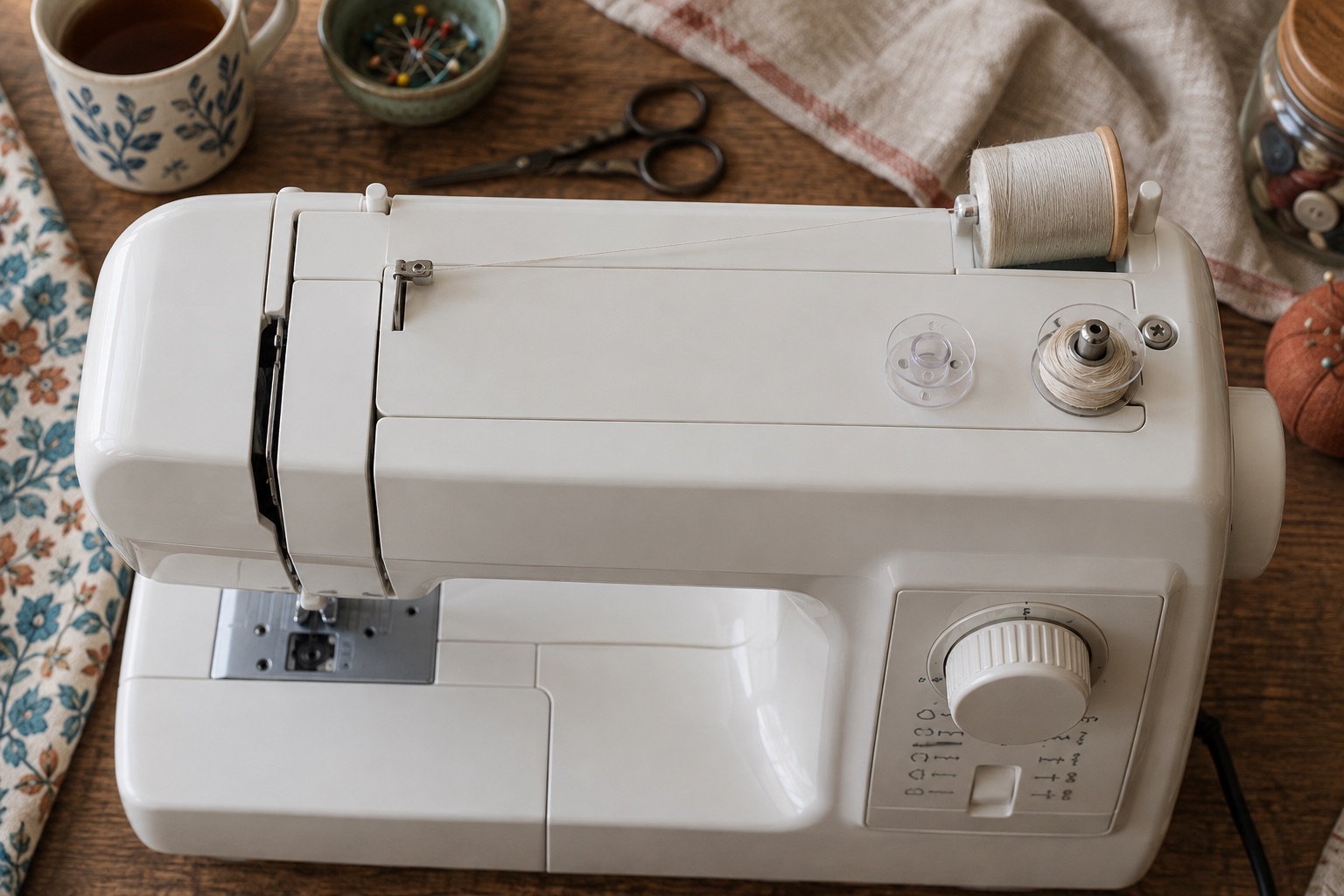
“The bobbin will not wind” can mean three different things: the winder does not rotate, the spindle turns while the bobbin slips, or the bobbin rotates but builds a loose, lopsided or tangled wind. Look at the movement before deciding the motor is faulty. Unplug to reset the setup, then perform only the powered check your manual describes, keeping fingers clear of moving parts.
Start with the symptom you can actually see
If nothing turns, check that your model is in bobbin-winding mode. Some machines require sliding the spindle; others use a control or clutch arrangement. Use the exact manual rather than forcing a spindle. Confirm the power, pedal or start/stop arrangement normally operates the machine. A winder that still makes no movement after proper engagement may have a drive fault.
If the spindle turns but the bobbin does not, remove it with power off. Verify the correct bobbin type, check whether it is pressed fully down and look for a cracked or distorted centre. An almost-fitting bobbin may spin poorly and later sew poorly too. See our bobbin compatibility guide.
If the bobbin turns but fills unevenly, the usual first checks are thread route, pre-tension guide, starting wrap and spool delivery. A bobbin that piles thread at one edge should not be installed in the sewing position. Do not try to correct a bad wind by tightening the sewing bobbin-case screw.
Reset the winding route in the right order
- With power off, remove tangled thread from the accessible winder area. Do not disassemble its drive or cut thread beside a belt.
- Put the spool on its pin with the cap or stand arrangement specified by the maker. Pull thread through the bobbin-winding pre-tension guide, not merely through the normal upper-thread guides. Brother's winding guidance specifically calls out that guide when a bobbin winds poorly.
- Pass the starting end through or around the bobbin hole as your manual shows and seat the correct empty bobbin firmly. Hold or trim the starting tail only as directed. Keep the spool thread clear of the spindle base.
- Engage winding mode. Start slowly if the model permits, then let the bobbin fill evenly and stop at its intended level. Disengage the winder before sewing.
Our step-by-step winding guide explains what a usable wind looks like. If a bobbin is cracked, warped or genuinely the wrong part, replace it with the exact approved type. The Brother SFB/SA156 product below is suitable only where the manual calls for that 11.5 mm plastic bobbin; it is not a generic solution for all Brother machines, let alone other makes.
Brother 11.5 mm sewing-machine bobbins, pack of 10
A useful spare set after confirming the exact Brother model's bobbin part code in its manual or support page.
Ten 11.5 mm plastic bobbins for Brother machines whose manual explicitly specifies SFB or SA156; not a universal bobbin replacement.
Keep in mind
- Do not use if your machine specifies another bobbin height, shape or material.
- The Amazon title alone does not prove compatibility with every Brother machine.
Test the result before sewing a project
A good test bobbin is level, neither soft and loopy nor packed above the rim. If one correct bobbin winds and another slips, inspect the failing bobbin. If all exact bobbins slip despite proper seating, the spindle or winder drive may need attention. Insert a sound test bobbin according to your top- or front-loading manual and sew a small woven-cotton sample. An unevenly wound bobbin can cause poor stitches or lower-thread breakage later.
When to stop troubleshooting
Do not force a stuck spindle, defeat a guard, lubricate an unspecified drive or keep running a winder that grinds, slips with every correct bobbin, smells hot or fails to disengage. Switch off and contact the maker, retailer or a technician. See when to call for service.
Frequently asked questions
Why does the bobbin fill on one side only?
Check the pre-tension winding guide, spool feed and bobbin seating. Rewind from empty; do not sew with a cone-shaped wind.
Why does the needle move while I wind?
Winder engagement varies by model. Check your manual's clutch or winding control; do not try to hold the needle stationary by hand.
Will a new bobbin fix a stationary winder?
Usually not. A replacement helps only when the old bobbin is wrong, damaged or slipping while the spindle itself rotates.
Sources
Brother's poor bobbin-winding troubleshooting identifies seating, starter wrap and pre-tension-guide errors. Its common sewing-machine problems guide explains when normal checks give way to service. The precise winding control and approved bobbin are model-specific; use your manual.