
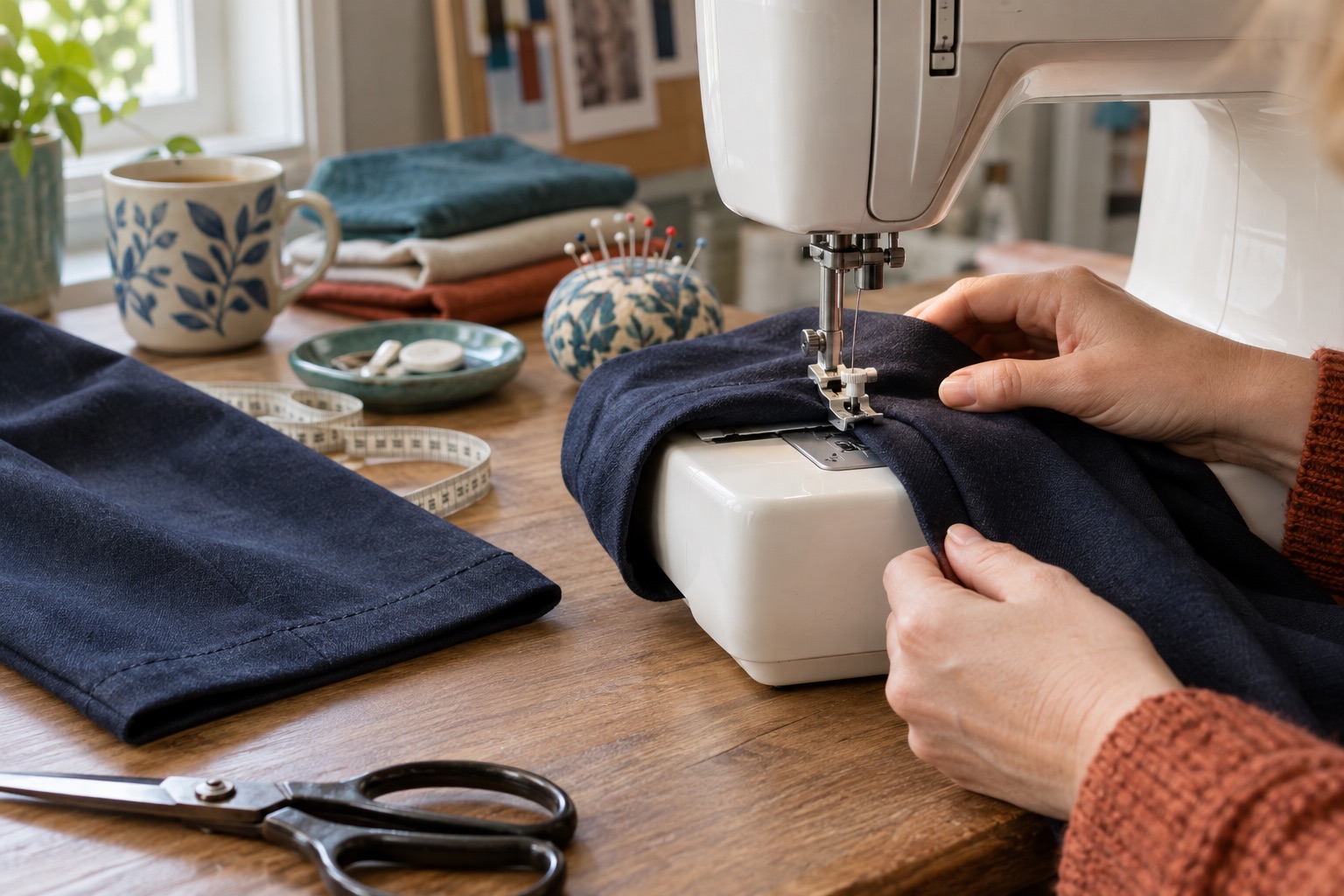
A blind hem is made by hiding most stitches inside a folded allowance and taking a tiny bite of the garment face at intervals. The blind-hem foot supplies an edge guide, but it cannot rescue a fold that is the wrong depth. For trouser or skirt alterations, spend your first minutes at the ironing board, then use the machine on a sample.
Why the stitch is hard to see
A typical machine blind-hem pattern makes several stitches along the hem allowance and an occasional side swing that catches the garment's outer layer. When the hem is unfolded and pressed, only tiny catches should show outside. If each catch looks like a large dot, the guide or fold has placed too much face fabric under the needle. If the hem falls open, it has caught too little. The foot sets a repeatable route past the guide; the fabric fold sets how much can be caught.
Blind-hemming works well on many medium-weight woven trousers and skirts. Smooth, very lightweight fabric often exposes every bite and may pucker; hand blind stitching, a narrow topstitched hem or a lining method may look better. Knits need a stretch-compatible method and the machine's specific blind-hem stitch for stretch, where available. Do not use a rigid ordinary blind stitch on a hem that must expand over a body or foot.
Fold, test, inspect, then hem the garment
First establish the finished length while wearing the intended shoes or fitting the garment on the wearer. Mark consistently, allow for the hem depth, trim only when the allowance is settled and finish the raw edge if needed. Press the hem up. Then fold the bulk of the garment back so a narrow strip of the allowance remains exposed beside the fold. This feels counter-intuitive; Brother's blind-stitch tutorial shows the folding sequence visually.
Fit the correct foot with the machine switched off. Choose the matching blind stitch and width from your model manual. Place the fold against the foot guide and rotate the handwheel through its full left-right swing to confirm the needle cannot strike the guide or plate. Sew a short section on a scrap folded in the same way. Open it out, press lightly and inspect the public side in daylight. Move the guide in tiny increments if too much or too little fabric is caught. Only then repeat around the actual hem, supporting the garment so its weight does not pull the fold away from the guide.
What if the hem is visible or rippled?
Large outside stitches mean the needle is biting too deeply; reposition the fold or adjustable guide. Gaps or a dropping hem mean the swing misses the fold too often. A line of puckers may reflect over-tight upper tension, a needle too large for the cloth, too-dense stitching or unsupported fabric. Test one change at a time using the puckered-seam guide. If the thread breaks or the needle hits metal, stop immediately and inspect fitting and stitch choice—never compensate by pushing the fabric sideways.
Do you need to buy one?
Many machines include a standard blind-hem foot, often marked “R” or “G” depending on brand. Brother also offers an adjustable F017N, but its compatibility varies by model. The standard supplied foot is enough for most first hems. We have not placed a marketplace card for a vaguely labelled replacement because a maker code and active exact-match UK listing are the safer buying basis. Check your machine's accessory list, shank geometry and approved stitch before shopping.
Frequently asked questions
Can a blind-hem foot sew a completely invisible hem?
Usually not in the literal sense. Tiny catches may remain visible, especially on smooth fabric or contrast thread. A careful test helps decide whether machine or hand hemming looks better.
Is a blind hem the same as a rolled hem?
No. A blind hem hides stitches on a deeper folded allowance; a rolled or narrow hem encloses a very small raw edge.
Can I blind-hem jersey trousers?
Only if your machine offers a suitable stretch blind stitch and your sample stretches enough after sewing. A twin needle or other stretch hem may be more reliable.
Sources
Brother's blind-stitch foot tutorial covers the fold, guide and inspection. Janome UK's how-to videos include blind-hemming demonstrations. Follow the stitch and accessory instructions for your exact model.