
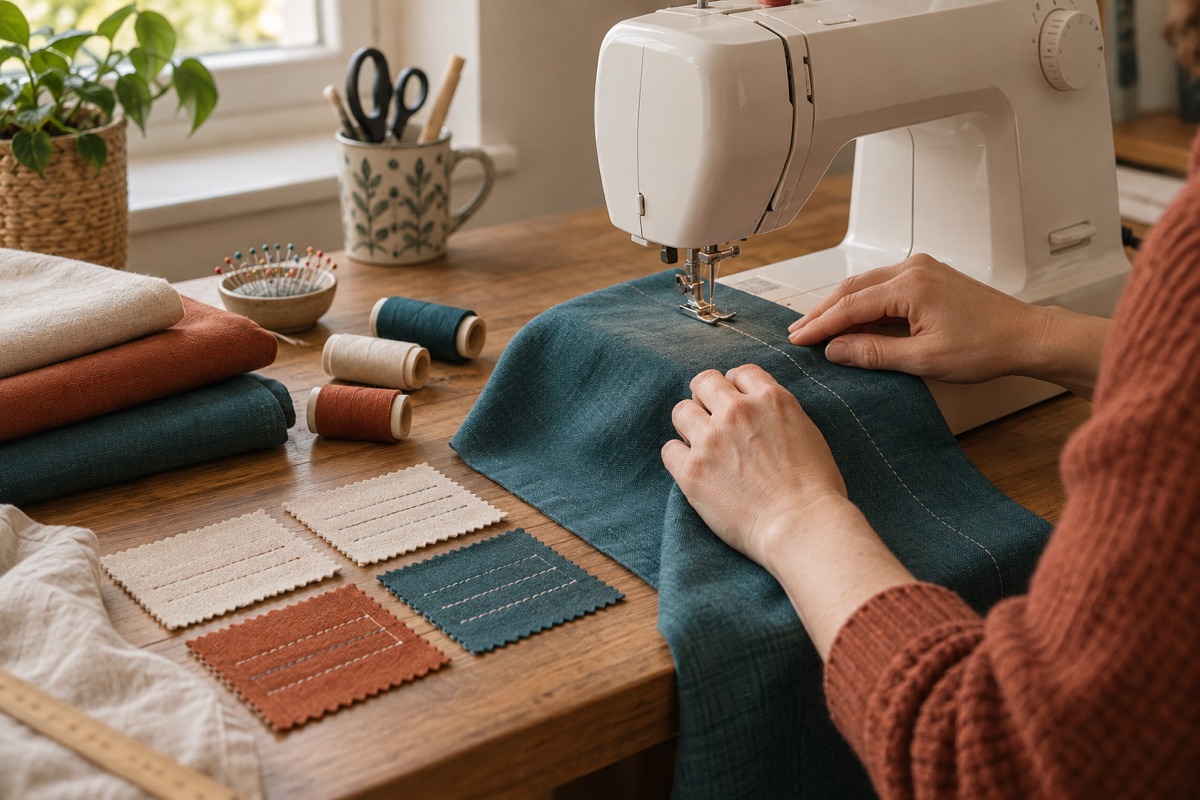
Woven fabric has interlaced warp and weft threads, unlike a knit that stretches by loop structure. Stable cotton is forgiving, but “woven” also includes fine lawn, loose linen, crisp poplin, denim and slippery lining. Use one starting setup, then judge the sewn sample rather than copying a single set of numbers into every project.
A sensible starting setup for stable cotton
Choose a straight stitch with the needle in the position your foot and seam guide expect. Fit a new universal needle in a size appropriate to the cloth and thread; a finer woven may need a smaller needle than medium-weight cotton, while dense denim needs a different needle altogether. Use good general-purpose thread in both top and bobbin unless the machine manual says otherwise. Start with the machine's normal upper-tension setting and a moderate 2.5 mm stitch length. Lift the presser foot when threading so the thread enters the tension discs, then lower it for sewing.
The SCHMETZ universal assortment is a useful way to have more than one size available, but match the needle to the actual fabric. Gütermann Sew-All is a general-purpose polyester thread; a matching colour and sound winding matter more than buying several specialty threads for a first woven seam.
SCHMETZ Universal needles, assorted sizes
A practical starting pack when the machine manual specifies the flat-shank 130/705 H system and your projects vary in fabric weight.
A ten-needle assortment spanning 70/10 to 100/16 for sampling fine-to-medium woven fabrics and ordinary sewing thread.
Keep in mind
- Universal point is not the first choice for very elastic knits.
- Check the needle system in your machine manual before buying.
What changes across woven fabrics?
| Fabric behaviour | First change to test | Watch for |
|---|---|---|
| Fine, tightly woven cotton | Finer suitable needle and a shorter-to-moderate stitch | Puckering or fabric drawn into a wide needle plate |
| Medium cotton or linen | Normal straight stitch and moderate length | Fraying at the raw edge, especially loose linen |
| Heavy twill or denim | Suitable jeans needle, level the foot over thickness changes | Deflected or broken needle at a bulky crossing |
| Slippery or delicate woven | Stabilise, baste or change pressure if the machine allows | One layer creeping ahead of the other |
These are starting questions, not guaranteed settings. Read the fabric label and test pressing heat on a hidden piece. If a fine cloth sinks into the needle plate, start on a stabilising scrap or use the maker-approved straight-stitch plate with a straight stitch only. Never select a zigzag while a straight-stitch plate is fitted.
Read the test seam before turning the tension dial
Sew two layers cut in the same direction as the intended seam. Run a straight section and a short curve, then look at the top and underside. If loops appear underneath, first rethread with the foot raised and check bobbin insertion. If stitches skip, replace the needle and check type/size. If the fabric puckers, try a fresh finer needle, appropriate pressure and a shorter or longer test stitch before making a large tension change. The tension guide separates thread-balance faults from feeding faults.
Choose a raw-edge finish for the project
A straight seam does not automatically stop a woven edge fraying. A zigzag or suitable overcasting stitch can be enough for ordinary garments; French seams suit some fine fabrics, and an overlocker can finish edges quickly. Choose the finish for seam allowance, cloth weight and wear, not because the machine has a decorative stitch. Our seam-finishing guide compares accessible options.
Frequently asked questions
Do I need to adjust tension for every woven fabric?
No. Start from the manual's normal setting and a properly threaded machine. Change it only after a test shows a real top/bobbin thread-balance issue.
Is a universal needle suitable for every woven fabric?
It is a good starting type for many stable wovens, not every cloth or thickness. Dense denim and delicate fine fabrics may need a more specific type or size.
Sources
Needle-type and size selection follows SCHMETZ's Universal Needle guidance and its needle guide. Use the exact stitch settings and plate warnings in your model manual.